
Sustainable event planning is no longer a niche concern reserved for environmental nonprofits. It is now a baseline expectation from corporate clients, attendees, and sponsors — and it only works when it starts on day one of your design process, not after the event is already built.
This is the lesson W. Edwards Deming taught the manufacturing world decades ago: quality cannot be inspected into a finished product. It has to be engineered into every step of the production process. The same logic applies directly to sustainable outdoor event design.
If you wait until the event is designed — or worse, already built on-site — to think about sustainability, most of your highest-impact decisions are already locked in.
What Is Sustainable Event Design?
Sustainable event design is the practice of designing, producing, and executing events in ways that reduce environmental impact, conserve resources, and support social responsibility — from the moment you open a blank site map to the moment the last tent comes down.
It covers every category of decision: venue selection, site layout, transportation access, waste management, catering, energy sourcing, vendor selection, and attendee communication. Treating any one of these as an afterthought limits what you can actually achieve across all the others.
Why the Traditional Approach Falls Short
The conventional approach to sustainable event design has followed a predictable pattern: design the event, build it, then evaluate its environmental impact — often through a third-party assessor walk-through, or worse, a post-event audit.
This reactive model limits what can actually be improved. By the time an assessor arrives on site, the venue is locked in, the layout is fixed, the vendor contracts are signed, and the transportation patterns are set. A sustainability checklist handed to an event producer after the design phase is mostly decoration.
Some processes improve on this slightly by offering paper-based sustainability checklists at the start of the design phase. But a checklist sitting outside your design tool is still disconnected from the decisions being made inside it.
The EventMapStudio approach is different: sustainability is integrated directly into the event design tool itself, so every spatial decision — where you place an entrance, how you route foot traffic, where you site your waste stations — is made with environmental impact visible in real time.
The 6 Pillars of Sustainable Event Design
1. Venue and Site Selection
The most impactful sustainability decisions happen before a single tent is staked. Venue selection determines your transportation footprint, your energy options, your waste infrastructure, and your natural resource consumption for everything that follows.
Key criteria for a sustainable venue:
- Proximity to public transit (bus corridors, rail stations, light rail)
- Existing utility infrastructure (power hookups, water access, drainage)
- Green certifications or demonstrated sustainability policies
- Natural features that reduce the need for artificial lighting or climate control
- Site topography that supports efficient waste station placement and crowd flow
EventMapStudio tip: The built-in Public Transit Wizard helps you locate and display nearby mass transit options directly on your event map — so you can design your entrance placement around transit access, not the other way around.
2. Transportation Planning
Transportation is typically the single largest contributor to an event's carbon footprint, often accounting for the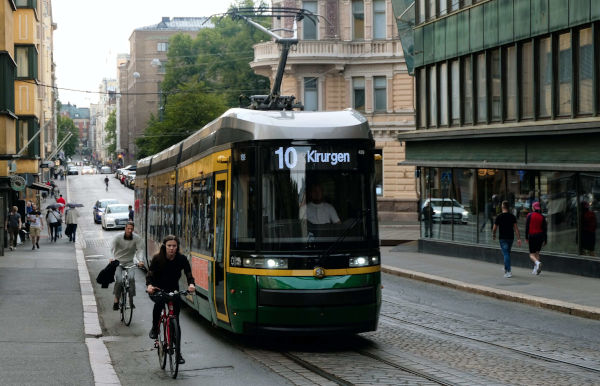 majority of total emissions. Yet most event planners treat it as a logistics detail rather than a design criterion.
The difference is significant. If you site your main entrance within easy walking distance of a subway stop, a bus corridor, or a light rail station, you make the low-impact choice the convenient one — without lecturing anyone or adding a sustainability footnote to your program. Thousands of attendees may leave their cars at home simply because you made the walk shorter.
Sustainable transportation planning checklist:
- Map all transit options within 0.5 miles of the venue before finalizing entrance placement
- Design pedestrian pathways from transit stops to main entry points
- Provide clear, prominent transit directions on your event map and communications
- Designate EV charging zones in parking areas
- Offer secured bike parking (aim for 1 rack per 30 attendees at minimum)
- Consider shuttle service from major transit hubs for large events
3. Waste Management
Poor waste management is one of the most visible failures at events — and one of the most preventable, when planned spatially from the start.
The placement of recycling, compost, and landfill bins is not a day-of logistics task. It is a site design decision.  Bins placed too far from food and beverage areas see dramatically lower diversion rates. Bins without clear signage result in contamination that sends recyclables and compostables straight to landfill.
Sustainable waste planning checklist:
- Place waste stations within 30 feet of every food and beverage service point
- Design for a minimum 3-stream system: landfill, recycling, compost
- Size your waste capacity to expected attendance (under-capacity leads to overflow and contamination)
- Include signage with images, not just text labels
- Brief all catering vendors on compostable serviceware requirements before contracts are signed
- Designate a materials recovery area for vendor breakdown waste
Metrics EventMapStudio helps you track: number of recycling bins, compost bins, green/compost portalettes, vendors providing compostable serverware, water bottle refill stations, and organic food vendors — all mapped spatially against your site layout.
4. Energy and Utilities
Generator-powered events carry a significant carbon load. Reducing that load starts in the design phase, not on load-in day.
Sustainable energy planning: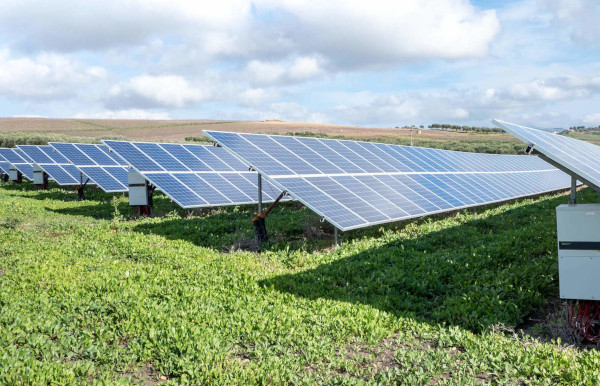
- Audit your power draw requirements before selecting a generator (oversizing is common and wasteful)
- Prioritize vendors who supply renewable-energy generators or battery storage systems
- Cluster power-hungry production elements to reduce cable runs and load
- Use LED lighting throughout — it consumes roughly 75% less energy than incandescent equivalents
- Consider solar-powered EV charging stations and solar-powered information kiosks
Metric to track: number of renewable energy generators, electiric vehicles, auto-stop electric equipment, and LED lights on site.
5. Catering and Food Vendors
Food and beverage is typically the second-largest source of event waste after printed materials, and food production itself carries a meaningful emissions profile.
Sustainable catering planning:
- Prioritize local sourcing — food traveling shorter distances generates fewer emissions and supports regional producers
- Offer plant-forward menus as the default, with alternatives available
- Require compostable serviceware in vendor contracts (not just "encouraged")
- Build a food donation pathway into your waste plan before the event
- Track the ratio of vegetarian, vegan, and organic food vendors as a sustainability metric
- Right-size catering orders using registration data to reduce overproduction
Metrics EventMapStudio helps you track: number of vegetarian, vegan, and organic food vendors, and vendors providing compostable serverware, — mapped to your site.
6. Attendee Communication
The most sustainable event layout in the world delivers limited impact if attendees don't know how to use it. How you communicate your sustainability work shapes whether attendees actually change their behavior — and whether your sponsors can point to concrete ESG outcomes.
Effective attendee sustainability communication: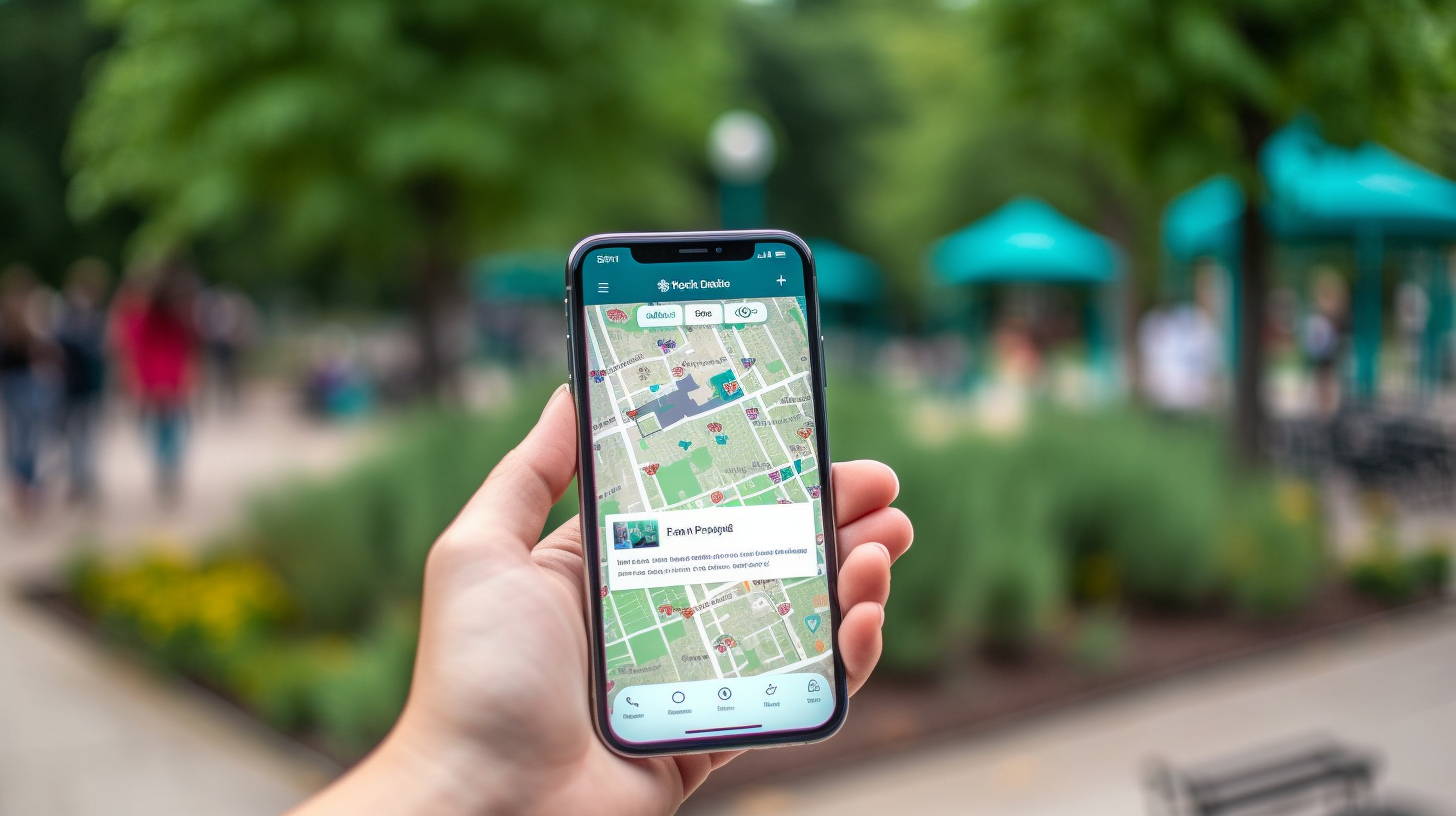
- Display your event map prominently showing transit access routes, bike parking, and waste stations
- Use your event map as a public-facing sustainability communication tool, not just an internal planning document
- Share post-event sustainability metrics with attendees, sponsors, and media
- Make the low-impact choice the obvious, well-signed choice — not a footnote
EventMapStudio tip: The public-facing Map/Mobile map lets attendees see sustainability features — transit options, recycling stations, bike racks, vegetarian food vendors — directly on their phones, before and during the event, and can help them modify their behaviortowards sustainability..
Sustainable Event Planning Metrics to Track
Measuring what you manage is essential. These are just some of the key metrics to baseline and improve across events:
Category | Metric |
|---|---|
Transportation | Number of public transit stations within 0.5 miles; EV parking spots; bike rack capacity |
Waste | Number of recycling bins; compost bins; green portalettes; waste diversion rate |
Food | Number of vegetarian / vegan / organic food vendors |
Energy | Number of renewable energy generators |
Outcomes | Estimated carbon reduction vs. baseline; post-event attendee sustainability satisfaction |
EventMapStudio tracks and maps each of these metrics spatially, so your sustainability report reflects what was actually deployed on the ground — not just what was intended.
Common Challenges (and How to Handle Them)
Budget pushback. Sustainability initiatives sometimes cost more upfront. Counter this by presenting the full picture: digital signage eliminates reprinting costs, local sourcing cuts shipping fees, and reusable materials reduce purchase costs across multiple events. Sponsors with ESG mandates increasingly select events that can demonstrate sustainability credentials.
Vendor resistance. Require sustainability standards in contracts before signing, not as a request after. Vendors who have agreed in writing to use compostable serviceware will comply; vendors asked on the day of the event rarely do.
Measurement gaps. If you can't measure it, you can't improve it — and you can't report it to sponsors. Build your tracking methodology into the design phase, not the post-event phase.
The Bottom Line
Sustainable event planning works when it is engineered into the design from day one — not assessed after the fact. Every decision made early (venue, entrance placement, transit access, vendor contracts, waste station siting) either creates or forecloses sustainability options that come later.
That is the Deming principle applied to events: build quality — and sustainability — into the process, not the inspection at the end.
EventMapStudio integrates these principles directly into the event design workflow. Start your free trial and build sustainability into your next event from the first click.
Further Reading
- How EventMapStudio integrates sustainability into event design
- How to reduce your event's transportation carbon footprint with the Transit Wizard
- How to set up a solid waste program using spatial analysis
- How to conduct a real event sustainability audit
- How to communicate your sustainability work to attendees
Blog comments